
Can an NIW Response Replace the Proposed Endeavor? A Lawyer’s AAO Appeal
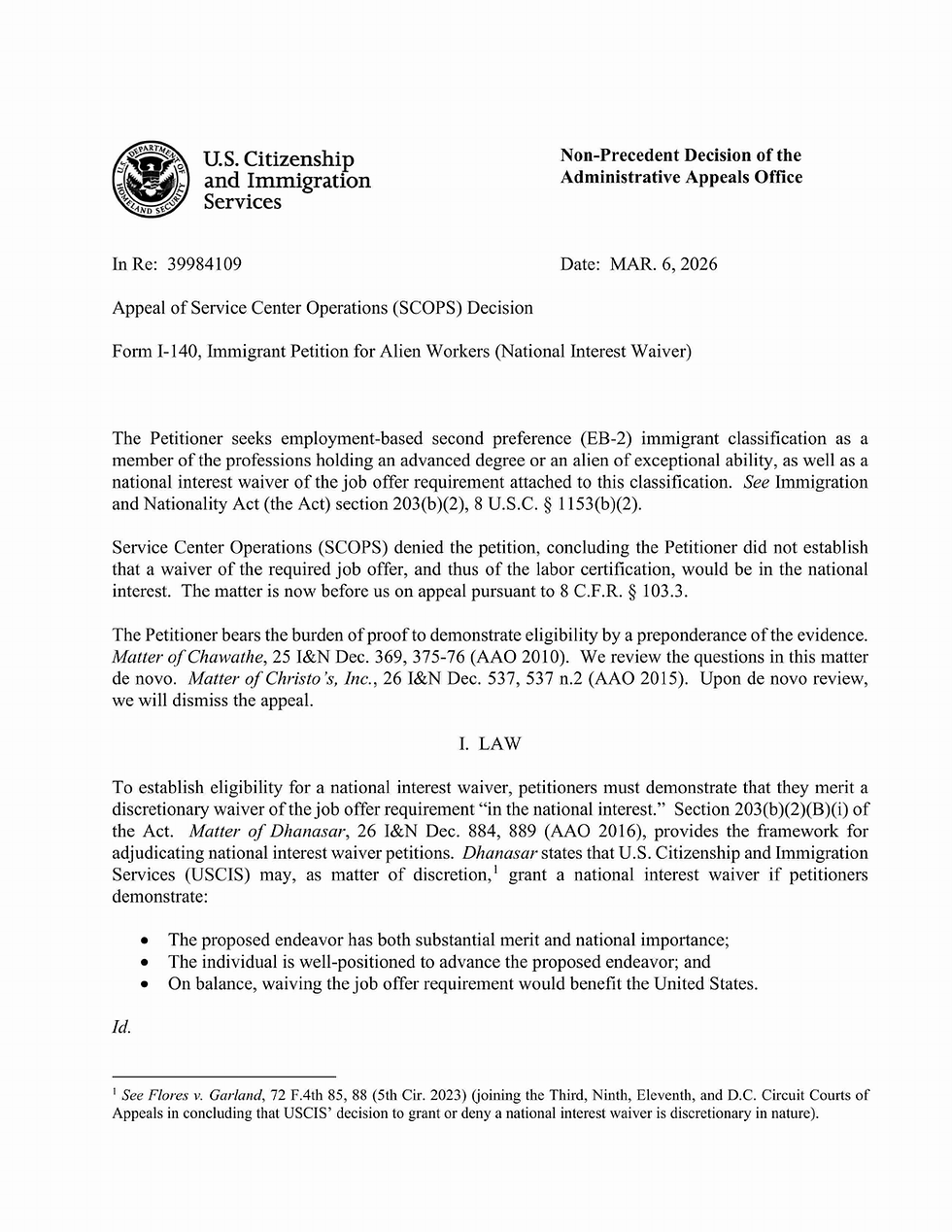
An NIW response can explain an existing proposal, but a substantially different proposal raises a separate eligibility problem. In In Re: 39984109, the petitioner initially described continued study and work as a lawyer. His response to a request for evidence introduced ownership of a legal-consulting and educational-services business, followed by more specific themes on appeal. The AAO concluded that the original filing had not identified the specific endeavor needed for the national-interest-waiver analysis and that a materially changed undertaking could not cure that defect.
The March 6, 2026 nonprecedent decision dismissed the appeal. It illustrates the importance of establishing the proposed work at filing; it does not prohibit every clarification, development, or new supporting document submitted during adjudication.
The filing described aspirations rather than a defined undertaking
The initial statement expressed a desire to continue studying, contribute to American society, and contract with U.S. companies as a lawyer. It did not identify particulars sufficient for the Dhanasar inquiry. In the RFE response, counsel’s cover letter instead described a business that would provide consulting, education, research, and jobs in an economically depressed area. On appeal, the brief emphasized anti-corruption compliance, access to justice in underserved areas, and law-and-technology integration. See pages 2–3.
The distinction was more than improved wording. The initial statement did not say that the petitioner would own and operate such a business. Footnote 2 notes that no separate updated petitioner statement accompanied the RFE cover letter. Footnote 3 also notes that the businesses allegedly interested in contracting with him were not identified.
Eligibility at filing constrained what the AAO could consider
8 C.F.R. § 103.2(b)(1) requires an applicant or petitioner to “establish that he or she is eligible for the requested benefit at the time of filing the benefit request” and remain eligible through adjudication. The AAO applied that rule alongside Matter of Izummi in declining to consider the materially changed business endeavor. See page 3.
This is not a general ban on later evidence. Evidence submitted later may document facts or a proposal already existing at filing. Here, the AAO found a different undertaking and abandonment of the initial proposal. Describing every additional detail as an impermissible material change would overstate the decision.
An undefined endeavor affected the entire NIW framework
Dhanasar asks whether the proposed endeavor has substantial merit and national importance, whether the person is well positioned to advance it, and whether waiving the job-offer requirement would benefit the United States on balance. The AAO explained that without a specific endeavor it could not meaningfully apply those inquiries. It also withdrew the favorable substantial-merit determination below, expressly noting that the record lacked a sufficiently specific endeavor. See page 3, footnote 4.
The decision did not endorse or reject legal services as a field of national importance. Nor did it conduct a complete alternative analysis of a properly documented consulting enterprise. The dispositive problem was the proposal in this petition and the timing of the materially changed facts.
The result and the practical drafting question
The AAO dismissed the appeal and left the petition denied. It did not need to review the favorable underlying advanced-degree classification determination. See page 4 and footnote 6. The decision’s general notice about possible future removal proceedings was not itself a removal order.
Before responding to an RFE, counsel should compare the original endeavor statement, forms, planned activities, supporting commitments, and the proposed response. The question is whether the response substantiates the undertaking already presented or depends on a different factual foundation. If the underlying plan has materially changed, the available procedural options require an individual assessment; more persuasive prose alone cannot establish eligibility on facts that did not exist at filing. This historical nonprecedent decision must be read with the complete record and applicable later law.
Legal Disclaimer. Originally published: 11/01/2026. This article provides general information only and is not legal advice for any particular matter. Laws, policies, procedures, fees and agency practices may change; their application depends on the facts and jurisdiction. Consult a qualified attorney about your circumstances before acting on this information. Reading this article or contacting Blumsack & Canzano does not, by itself, create an attorney-client relationship. Past results do not guarantee future outcomes. This material may be considered attorney advertising in some jurisdictions.


