IRS Reminder: A Charitable Deduction for Non-Itemizers Starts With 2026 Donations
In IR-2026-135, issued November 10, the IRS reminded eligible taxpayers who do not itemize that qualifying cash donations made in 2026 may support a deduction of up to $1,000, or $2,000 for married taxpayers filing jointly. For individuals using the calendar tax year, this generally means claiming the deduction on a 2026 federal income tax return filed in 2027.
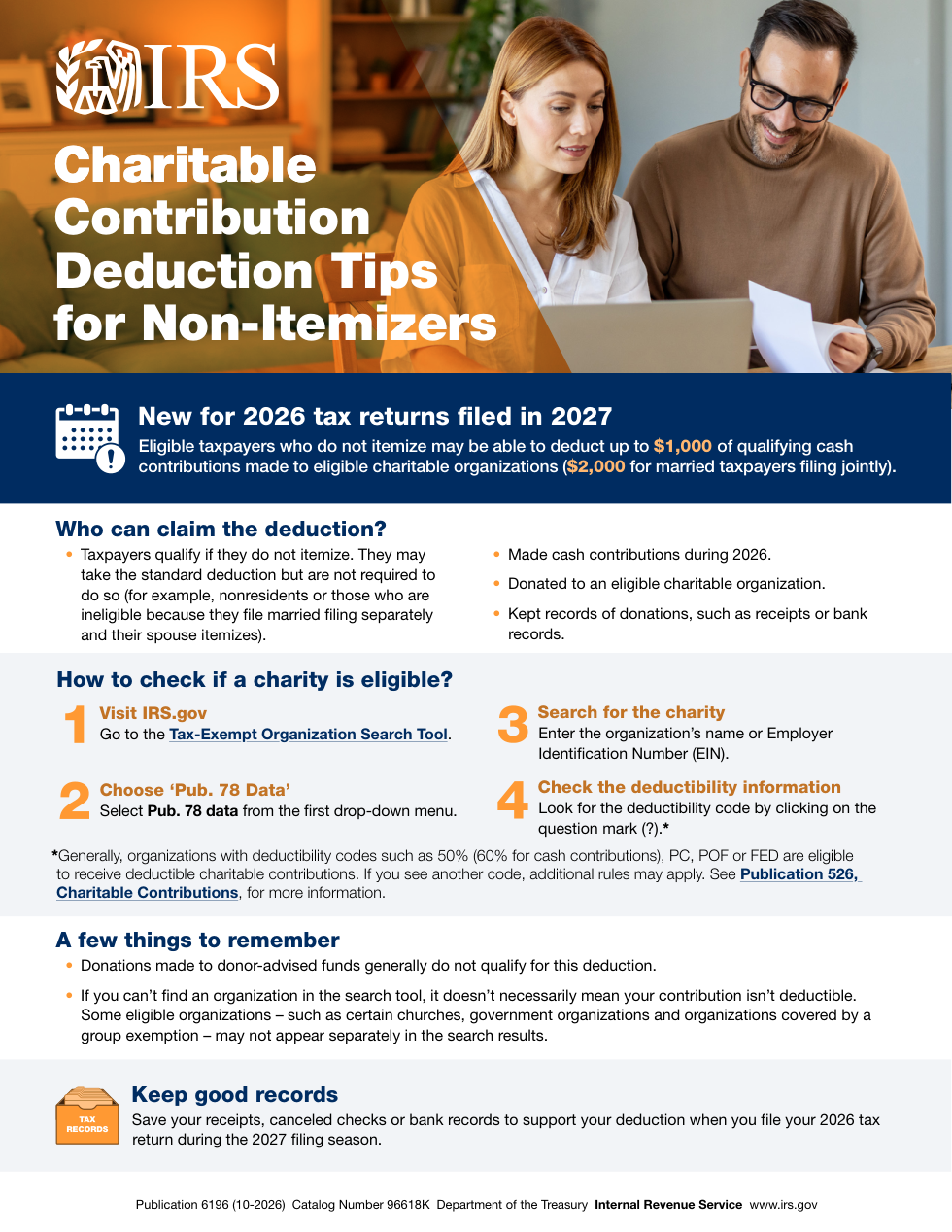
A deduction, not a dollar-for-dollar refund
The announcement did not enact a new law on November 10. Section 70424 of Public Law 119-21 amended the deduction for tax years beginning after December 31, 2025, without a scheduled expiration for this provision. The IRS announcement is a reminder to prepare for the coming filing season.
The $1,000 and $2,000 figures are deduction ceilings, not automatic payments. An eligible single taxpayer who makes $600 in qualifying gifts cannot claim $1,000 simply because that is the cap. If the taxpayer gives $1,500, the entire amount is not deductible under this particular non-itemizer provision. The effect on the tax bill depends on the taxpayer's circumstances; a deduction is not an equal-sized tax credit or refund.
Check both the payment and the recipient
Qualifying cash gifts include eligible monetary payments, not just currency. Donations of clothing, furniture, or other property do not qualify for this deduction. A gift directly to an individual is also different from a gift to an eligible charitable organization. A recipient's nonprofit label alone does not establish deductibility. Contributions to donor-advised funds and certain supporting organizations are excluded from this provision.
IRS Publication 6196, shown above, explains how to check an organization's status and deductibility information through Tax Exempt Organization Search. Absence from the search results is not conclusive: certain churches, government organizations, and organizations covered by a group exemption may not appear separately. Eligibility should be checked against the recipient's actual status and the donation arrangement.
Keep the records now and use the correct tax year
Under the IRS guidance on charitable contributions, monetary gifts require a bank record or written communication from the charity showing its name and the donation date and amount. A single contribution of $250 or more also requires attention to the contemporaneous written acknowledgment rules, including information about any goods or services provided in return. When a payment purchases a meal, admission, or another benefit, generally only the qualifying amount above the benefit's fair market value can be considered for deduction.
Before year-end, organize 2026 donation records, verify recipients, and request missing acknowledgments. Keep donations made in 2027 separate from the 2026 return. This federal rule should not be assumed to create an identical Massachusetts income tax deduction. Whether to itemize and how a gift affects an individual return require consideration of the full tax picture; the announcement does not make that choice for the taxpayer.
Legal information: Originally published November 11, 2026. This article provides general information only and is not legal advice for any particular matter. Laws, policies, procedures, fees, and standards may change, and their application depends on the facts and jurisdiction. Consult a qualified attorney about your circumstances before taking action. Reading this article or contacting Blumsack & Canzano does not by itself create an attorney-client relationship. Past results do not guarantee future outcomes. This article may be considered attorney advertising in some jurisdictions.

